“How much does septic tank pumping cost?” is one of the most common questions homeowners ask when it is time to service their system.
The honest answer is that septic pumping costs vary from one property to another. Tank size, accessibility, location, system design, and the condition of the tank can all affect the final price.
Understanding these factors can help you request a more accurate quote and avoid unexpected charges.
What Determines the Cost of Septic Tank Pumping?
A straightforward residential pump-out will usually cost less than a property with a large, difficult-to-access, or heavily used system. Here are the most important pricing factors.
1. Septic Tank Size
Larger septic tanks hold more wastewater and solids, which takes additional time and equipment capacity to remove.
If you know your tank size, share that information when requesting a quote. Tank size may be listed on:
Septic permits
Property records
Inspection reports
Previous pumping receipts
Information provided by the previous property owner
Do not worry if you do not know the size. Many homeowners do not have complete septic records.
2. Tank Location and Accessibility
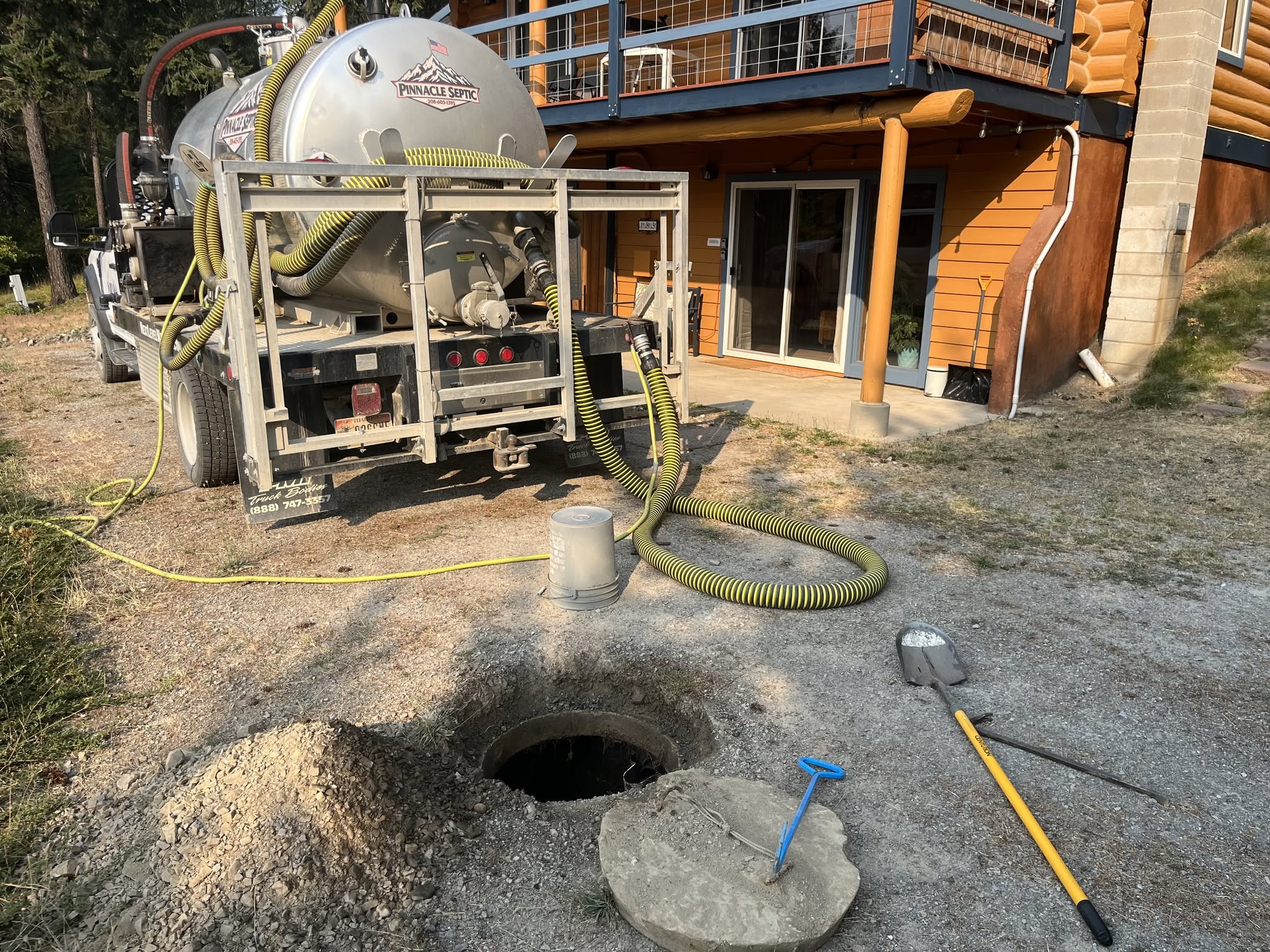
An easily accessible septic tank is generally simpler to service than one located under landscaping, pavement, a deck, or several feet of soil.
The cost may be affected if:
The tank location is unknown
Access lids must be uncovered
The lids are deeply buried
Fencing or locked gates restrict access
Vehicles or equipment block the service area
The pumping truck cannot get reasonably close to the tank
Snow, frozen ground, mud, or steep terrain makes access difficult
Providing clear access before the appointment can help the service go more smoothly.
For safety, homeowners should not enter a septic tank or attempt to remove heavy or damaged components themselves.
3. Distance from the Service Area
Travel distance can influence the cost of septic pumping, particularly for remote properties.
Pinnacle Septic serves Bonner and Boundary counties, including Bonners Ferry, Sandpoint, Moyie Springs, Naples, Ponderay, Sagle, Priest River, and surrounding North Idaho communities.
When requesting a quote, provide the complete service address so travel and access can be considered accurately.
4. How Long It Has Been Since the Last Pumping
Most household septic tanks need pumping approximately every three to five years, but the correct schedule varies.
A tank may need service more frequently based on:
Household size
Tank capacity
Water usage
Garbage disposal use
Seasonal or year-round occupancy
The amount of solid waste entering the system
A severely overdue tank may contain more accumulated sludge and solids, which can make the service more involved.
If you do not know when the system was last pumped, tell the provider. Unknown maintenance history is common, especially after purchasing a property.
5. The Type of Septic System
Not every property has a simple tank-and-drainfield system.
Some systems may include:
Multiple septic tanks
Pump chambers
Effluent filters
Electrical controls
High-level alarms
Advanced treatment components
Separate holding tanks
More complex systems may require additional time or specialized service. Let the provider know if your property has an alarm, pump chamber, or alternative septic system.
6. Additional Services
A standard pump-out may not include every service a property needs.
Additional work could include:
Locating the septic tank
Uncovering buried access lids
Pumping a second tank or chamber
Cleaning an effluent filter
Pumping an RV or separate holding tank
Additional inspection or troubleshooting
Emergency or after-hours response
Ask what is included in the quote so you understand the proposed service before work begins.
7. The Condition of the System
Pumping removes accumulated wastewater and solids, but it does not repair damaged components or restore a failed drainfield.
If the system has broken lids, damaged baffles, clogged lines, pump problems, or drainfield failure, additional evaluation or repair may be needed.
Warning signs include:
Sewage backing up into the home
Slow drains throughout the property
Gurgling plumbing
Persistent septic odors
Wet or unusually green areas near the drainfield
Wastewater surfacing outside
A septic alarm sounding
These symptoms should be mentioned when scheduling service so the provider understands that the property may need more than routine maintenance.
How to Get a More Accurate Septic Pumping Quote
Have the following information ready when you call:
Property address
Approximate tank size, if known
Date of the last pumping
Number of tanks or chambers
Location of the access lids
Whether the lids are exposed or buried
Distance from the driveway to the tank
Any current warning signs
Gate codes or access instructions
Whether the property is residential, commercial, or seasonal
Photos of the tank area may also help explain access conditions.
The more information you provide, the easier it is to prepare an accurate estimate.
How to Prepare for Your Pumping Appointment
Before the service truck arrives:
Clear vehicles and equipment away from the access area
Unlock gates
Secure pets
Remove temporary obstacles
Mark the tank location if you know it
Avoid placing decorations, landscaping materials, or construction supplies over the lids
Let the provider know about soft ground, steep slopes, narrow roads, or other access concerns
Do not drive heavy equipment over the septic tank or drainfield to create access. The weight can damage underground components.
Is the Lowest Septic Pumping Price Always the Best Choice?
Price matters, but the lowest advertised number may not represent the complete service.
When comparing septic pumping quotes, ask:
What does the quoted price include?
Are travel charges included?
Does the quote cover the entire tank?
Are disposal costs included?
Is there an additional charge for buried lids?
What happens if the tank is larger than expected?
Will I be notified before additional work is performed?
A dependable provider should communicate clearly about the expected service and explain any conditions that could change the price.
Pinnacle Septic focuses on consistent, competitive pricing, honest communication, and professional service throughout North Idaho.
Routine Pumping Is Usually Less Stressful Than an Emergency
Waiting until sewage backs up can create property damage, sanitation concerns, and the need for urgent service.
Routine septic pumping gives you more control over scheduling and helps reduce the chance of an unexpected problem.
Regular maintenance can also help:
Protect the drainfield
Reduce sewage backup risks
Prevent unpleasant odors
Improve system performance
Identify visible concerns before they become larger problems
Create useful maintenance records for the property
Pumping cannot prevent every septic problem, but it remains one of the most important parts of responsible system maintenance.
Septic Pumping in Bonners Ferry, Sandpoint, and North Idaho
Pinnacle Septic provides dependable septic tank pumping for homeowners and businesses throughout Bonner and Boundary counties.
Every property is different, which is why an accurate quote starts with a few basic details about your tank, location, and access.
Call or text Pinnacle Septic at (208) 603-1395 to request a septic pumping quote.
When you call, have your property address, tank information, and last known pumping date ready if possible. If you do not know those details, our team can help you determine the appropriate next step.
Frequently Asked Questions
Can I get a septic pumping quote over the phone?
In many cases, an initial estimate can be prepared using your address, tank size, access information, and pumping history. The price may change if conditions at the property are different from the information provided.
Does it cost more if my septic lid is buried?
It can. Deeply buried or difficult-to-locate lids may require additional time and labor. Let the provider know whether the lids are exposed before the appointment.
How often should I pump my septic tank?
Many household septic tanks are pumped every three to five years. The proper schedule depends on tank size, household size, water usage, system design, and the amount of solids entering the tank.
Will pumping fix a slow drain or sewage backup?
Pumping may help when an overfilled tank is causing the problem, but slow drains and backups can also result from plumbing clogs, damaged components, or drainfield problems. The cause should be evaluated rather than assuming pumping will fix every issue.
How can I reduce future septic service costs?
Maintain a regular pumping schedule, keep service records, know the location of your tank, install accessible risers when appropriate, avoid flushing damaging materials, and keep vehicles or heavy equipment off the septic system.